Why Audience Understanding Surveys Are a Must-Have for Brands, Agencies, and Insights Teams
Go beyond traditional audience data and dive into what really makes an impact on your audience.
Understanding your audience has always been central to effective marketing. The challenge today isn’t whether audience insight matters; it’s how to get fast, actionable, and accurate insights baked into strategy and creative execution.
Many teams rely on demographics, analytics, and past performance to define their audiences. These inputs explain who people are and what they do, but they rarely explain why messages resonate or fall flat.
Audience Understanding Surveys fill that gap. By uncovering values, motivations, identities, and behaviors, these surveys help commercial brands, creative agencies, and marketing insights teams solve some of their most persistent research and execution challenges by offering unparalleled insights into their audience.
The Limits of Demographics and Traditional Audience Data
Demographic targeting remains a foundation of marketing, but it’s rarely sufficient on its own. Knowing an audience’s age, income, or location does not explain how they interpret messaging or what drives decision-making. Two audiences with similar demographics can differ significantly in how they shop, consume media, or relate to brands.
As a result, teams often default to broad positioning that reaches many people but doesn’t meaningfully connect with them. Messaging becomes “safe” rather than persuasive.
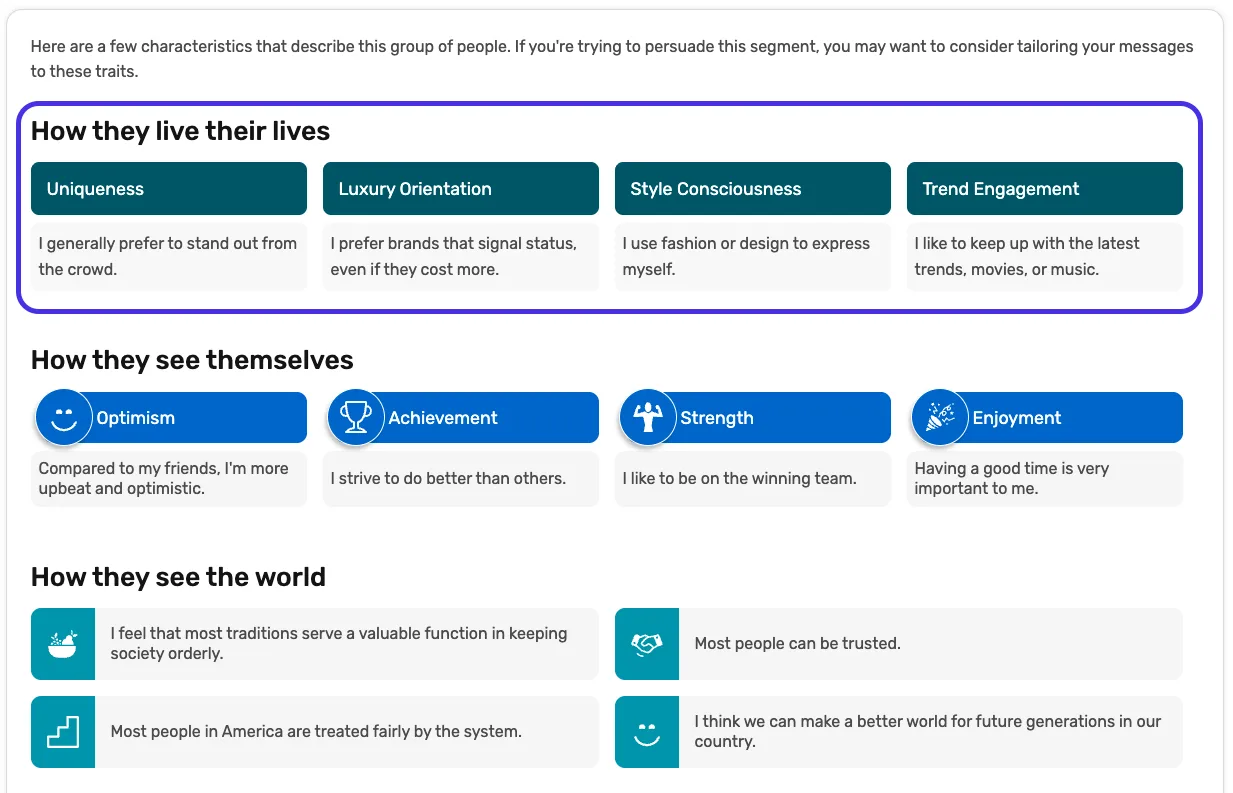
Audience Understanding Surveys go deeper by capturing how people describe themselves, what they care about, and what language feels authentic to them. This qualitative context allows teams to move beyond surface-level audience profiles and build strategies rooted in real motivation.
How Audience Understanding Surveys Improve Creative Strategy
Without strong audience insight, creative briefs are built on assumptions about what audiences want or value. But untested assumptions can backfire, sometimes massively, leaving companies with, at best, wasted ad spend, or worst, a PR nightmare and intense backlash to deal with.
Audience understanding surveys provide a stronger foundation. They surface emotional drivers, identity cues, and belief systems that inform message framing and tone. Instead of guessing which ideas will resonate, creatives can develop concepts backed by evidence, spending less time debating opinions and more time building around shared insight.
This doesn’t slow down creative work—it accelerates it. Audience understanding surveys offer a faster alternative to traditional qualitative methods like focus groups and in-depth interviews by delivering qualitative depth at scale. Teams gather and synthesize insight in days rather than weeks, making it possible to incorporate audience research into modern marketing timelines rather than treating it as a luxury or a one-time exercise.
Why Audience Understanding Is a Competitive Advantage
Audience Understanding Surveys are more than just research tools; they are bridges between data and creativity. They help teams move from broad targeting to meaningful connection, and from assumptions to informed decisions.
Commercial brands use audience understanding surveys to reduce risk, validate framing, and improve campaign performance by aligning strategy with real consumer motivation.
Creative agencies use them to strengthen creative briefs, inspire ideation, and build evidence-based strategies rather than assumptions.
Marketing insights teams use them to deliver faster, more actionable qualitative insight that connects directly to business outcomes.
In an increasingly competitive and fragmented media landscape, the teams that win will be those that truly understand their audiences. Not just who they are, but why they think, feel, and act the way they do. When you understand your audience at that level, everything downstream—strategy, creative, testing, and results—becomes more effective.