Super Bowl TV Ads and the Second Screen Phenomenon
Why attention quality determines ROI for commercial ad spots during the Super Bowl.
Every year after the Super Bowl, the same ritual plays out: hot takes, rankings, and debates over which brand “won the night” with their commercial. But when a single 30-second ad spot costs upwards of $8 million before production, the real question is “who was actually paying attention to the commercials, and what did that result in for the brand?”
In an era of fragmented attention and second-screen behavior, brands need to move beyond the belief that reach is the only metric that matters. To understand what Super Bowl attention actually looks like, and how it translates into influence, we surveyed 1,000 viewers after the game. We asked:
- What had most of your attention during commercial breaks?
- What were you doing on your phone during commercials?
- Did any ads influence how you view or consider a brand?
What we found reframes how brands should think about Super Bowl ROI.
Super Bowl Commercials Won’t Reach Everyone Equally, But They Don’t Need To.
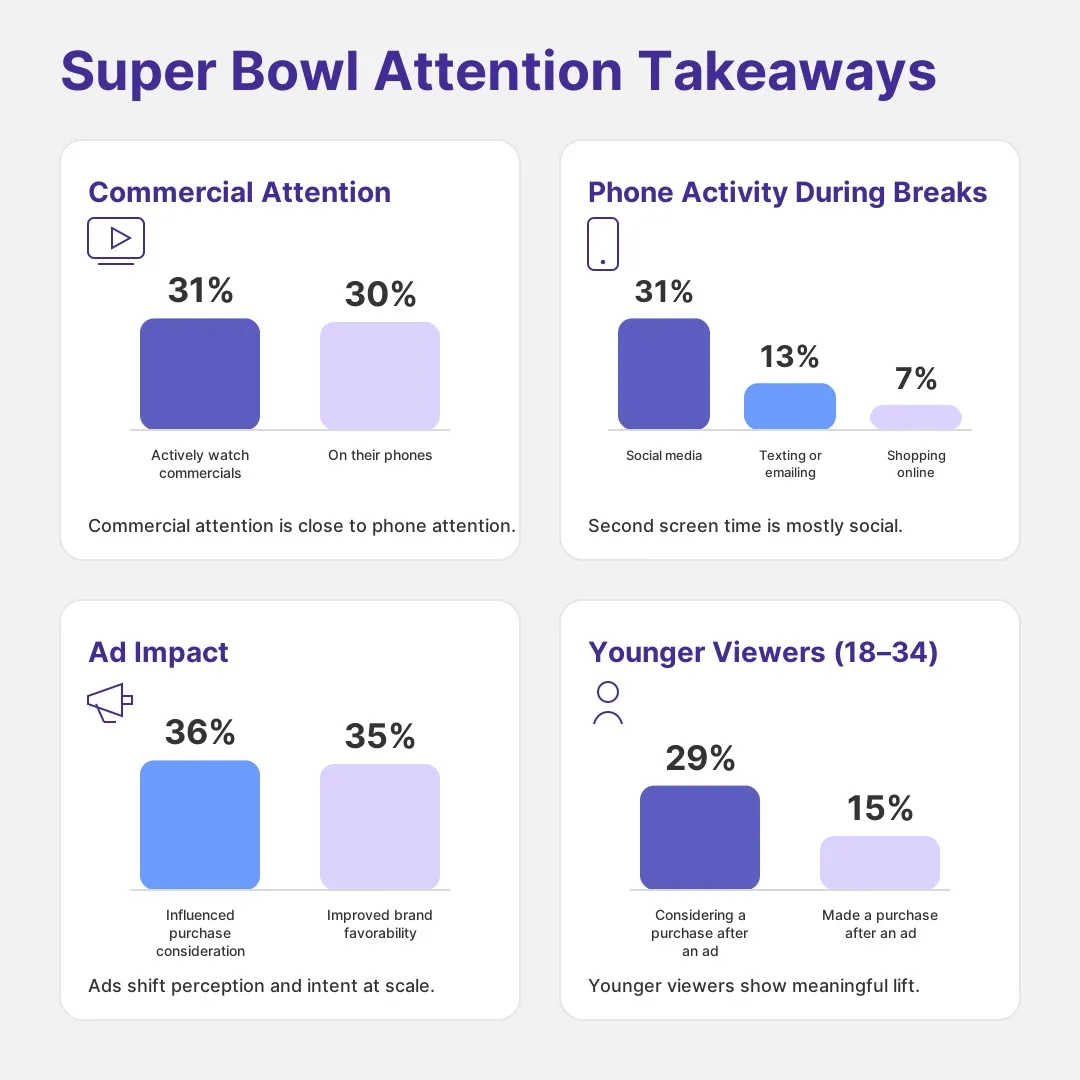
- 31% of viewers say they actively watch commercials.
- Those who care most about the game were also more engaged in commercials, and are more likely to have made a past purchase influenced by a Super Bowl commercial.
Attention Isn’t Absent, It’s Split.
- 30% of people turned to their phones during commercials. Social media as the dominant destination, with 31% saying they scrolled through the breaks.
- For brands, this means the Super Bowl is not a single-screen moment. They should consider how TV spots can extend into social conversation, be instantly recognizable in feeds, and expand the story beyond the 30-second spot.
Commercials Influence People’s Perceptions and Purchases.
- 35% report that Super Bowl commercials improve brand favorability, and 36% said they influenced purchase consideration.
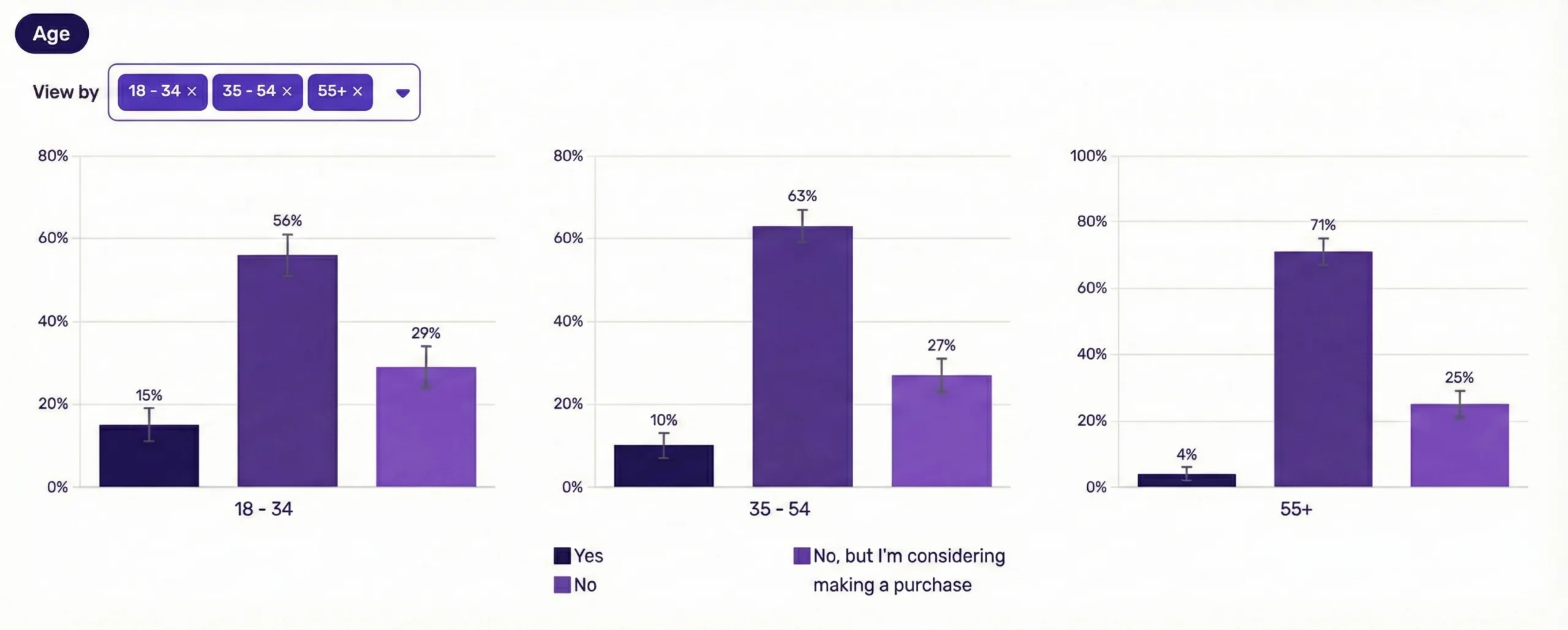
- Favorability and consideration are not “soft” metrics at this level of reach — they are leading indicators of long-term growth, especially for brands playing a multi-year game. The day after the Super Bowl, 9% of respondents said they had made a purchase driven by a commercial they saw, and another 27% they are considering a purchase.
Younger Viewers Watch Less – But Convert More.
- 25% of people ages 18–34 say they actively watch Super Bowl commercials and they are the most influenced by them. 15% report making a purchase after seeing a Super Bowl ad, and another 29% say they are considering one, compared with just 4% of viewers 55+ who made a purchase.
- Young audiences may glance less but they are more likely to shift brand perception, move into consideration and take action after exposure.
What Attention Actually Looked Like During Commercial Breaks
While topline results suggest Super Bowl audiences split their attention evenly between commercials and phones, age dramatically reshapes where attention actually goes.
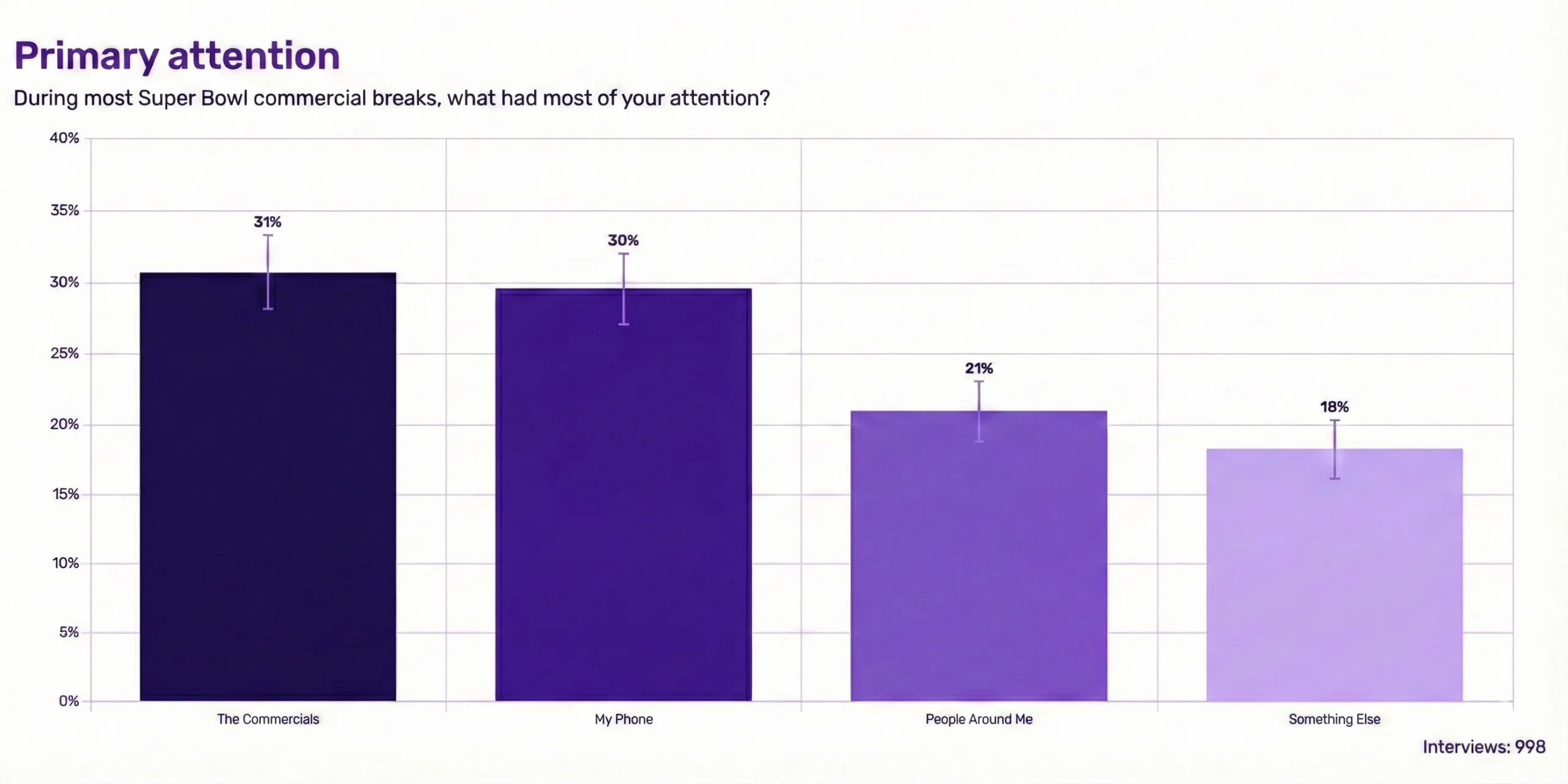
Younger viewers are far more likely to shift attention to their phones, while older viewers remain focused on the TV. This is why understanding which screen audiences are on is just as important as knowing how many people are watching.
What People Did on Their Phones
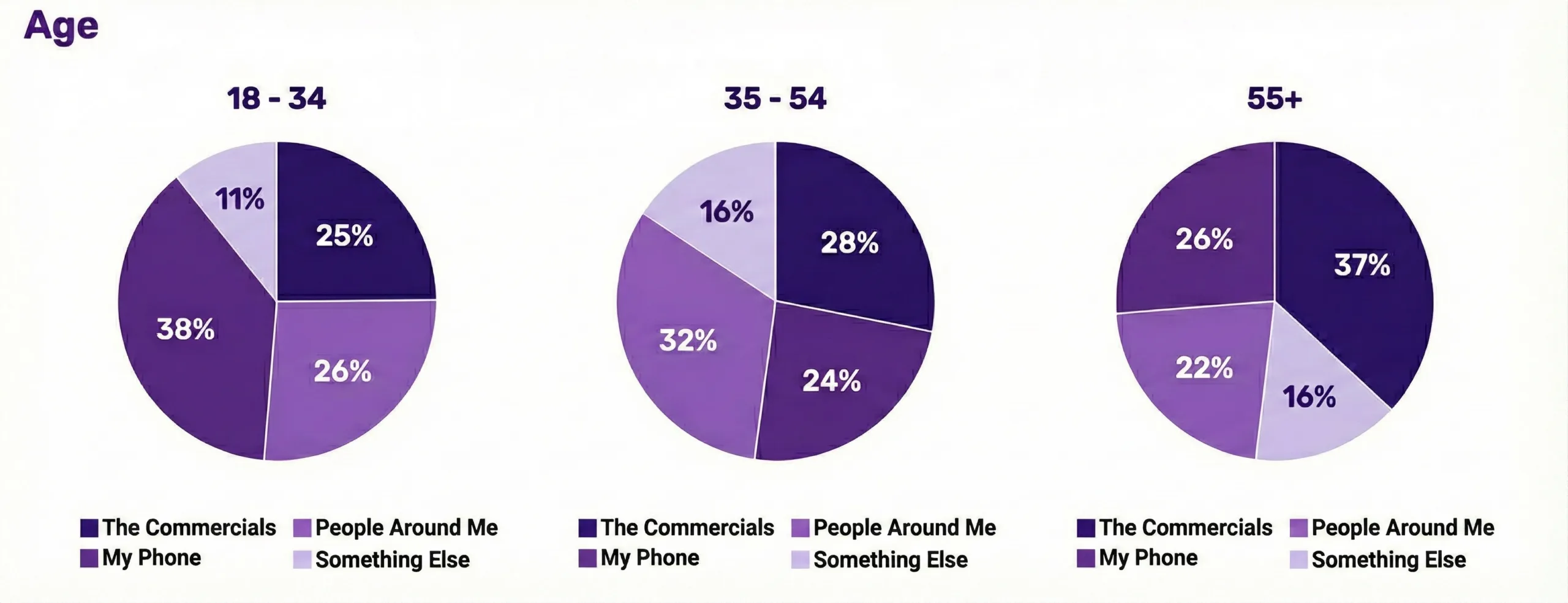
Once more, the topline results show an almost even split between people who are on social media (31%) and those who stay off their phones altogether (29%), but this varies by age.
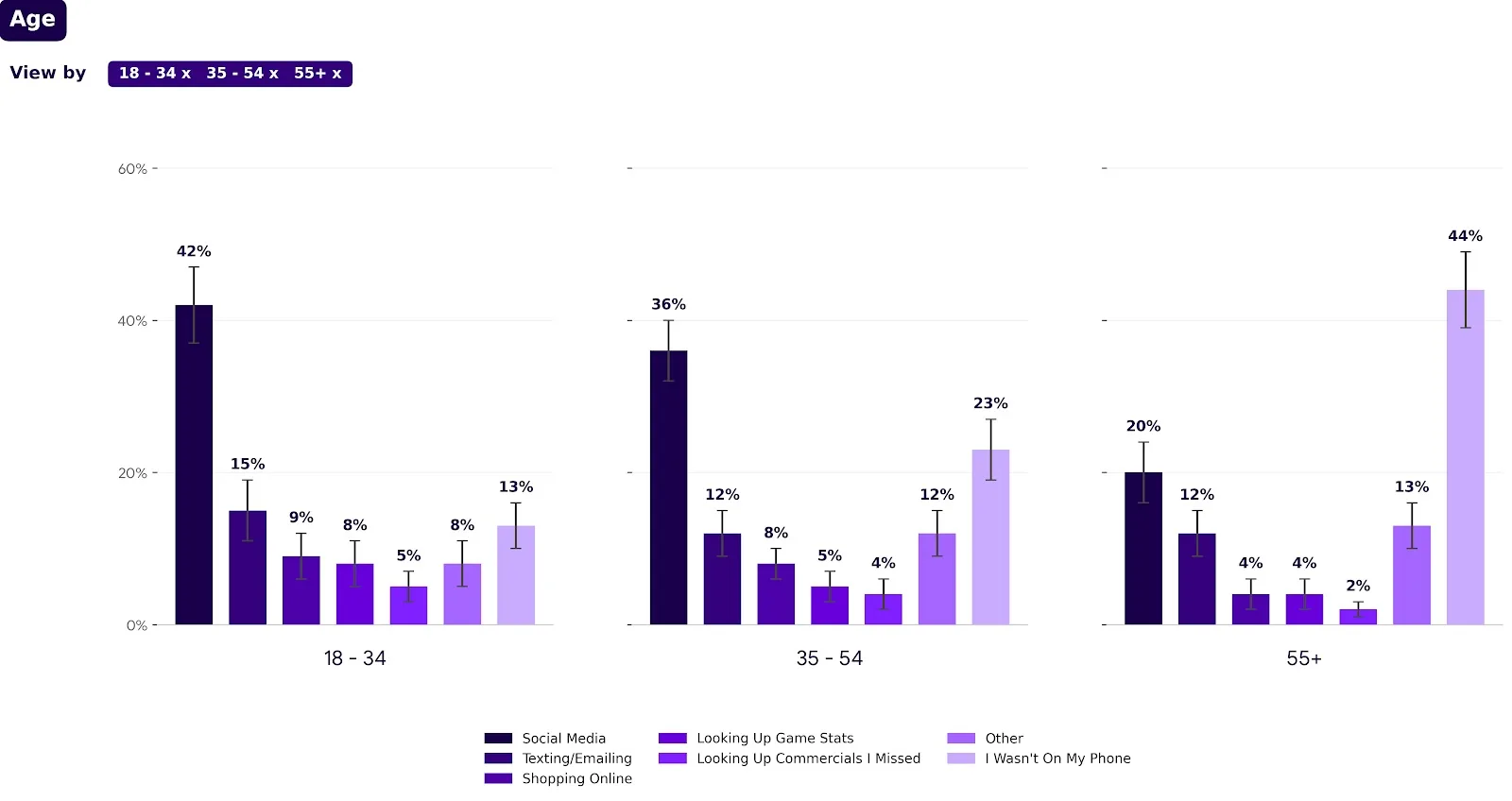
Younger viewers dominate social media activity during commercial breaks, with 42% of 18–34 year olds on their phones and on social media (well above the topline 31%). Only 13% say they weren’t on their phone at all.
The 35–54 audience most closely mirrors the topline averages, with 36% on social media, 23% weren’t on their phone, with the remaining splitting their attention between texting, stats, and other activities.
Purchases and Influence: Where the Real Value Lives
Despite people aged 18–34 watching less Super Bowl commercials than the other age groups, they are the most influenced by them. 15% report making a purchase after seeing a Super Bowl ad, and another 29% say they are considering one, compared with just 4% of viewers 55+ who made a purchase and 25% who are considering it.
Brand Favorability: The Long Game
Younger viewers are nearly twice as likely as those 55+ to say Super Bowl ads made them view a brand more favorably.
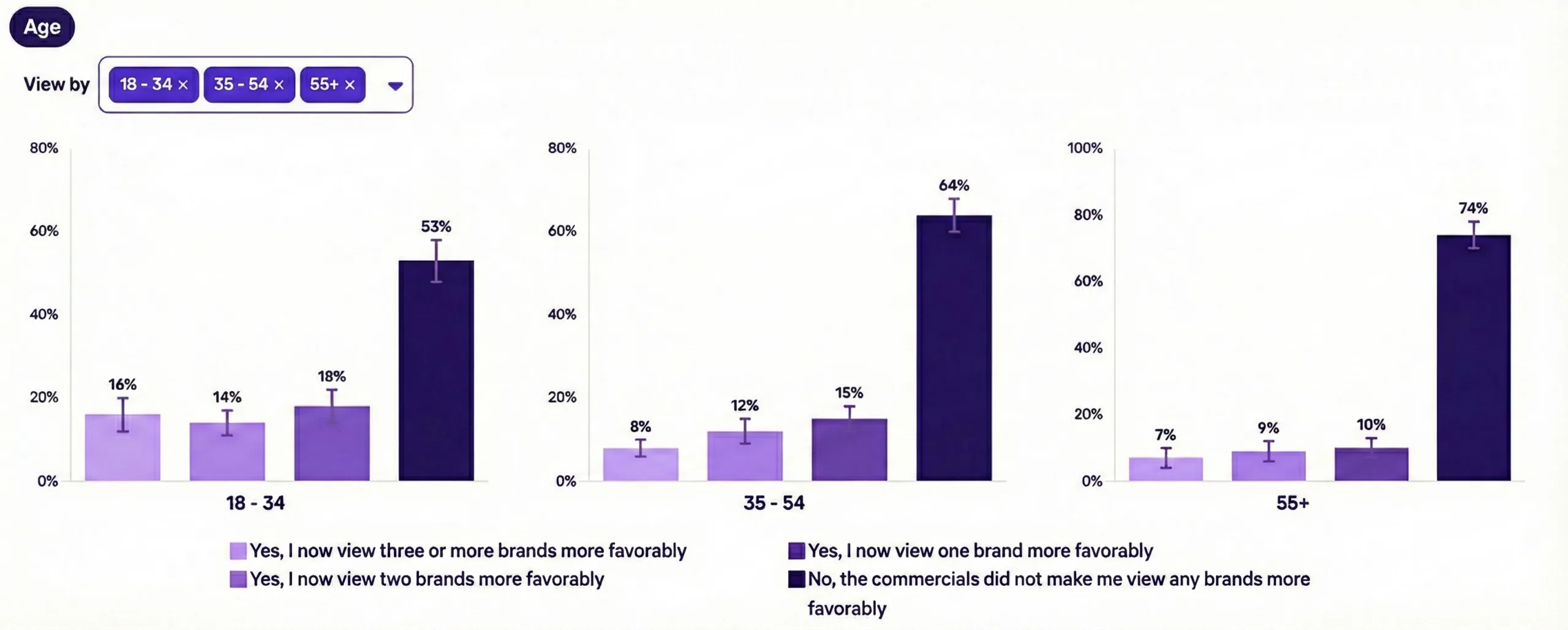
This reinforces a broader pattern across the research: while older viewers may be more attentive to commercials, younger viewers are more persuadable, making them a critical audience when brand perception and long-term growth are the goal.
Conclusion
Super Bowl advertising really is about understanding how attention is distributed, who holds it, and when it turns into influence. Our findings show that attention during commercial breaks is split across screens and age groups.
Older viewers tend to give commercials more of their visual attention, but younger viewers, despite watching less, are more likely to shift brand perception and purchasing behavior. At the same time, the most engaged Super Bowl fans remain a high-impact audience, combining sustained attention with a proven history of conversion.
In a media moment defined by scale and cost, success isn’t driven by total reach or post-game rankings. It comes from recognizing which audiences convert attention into impact, and designing creative and media strategies that meet them on the screens they’re actually using.
Build Campaigns Grounded in Real Attention Data
Want to build more effective campaigns centered on actionable audience insights? Let’s talk about how Grow Progress can strengthen your research toolkit.